

A loan origination system workflow is the series of steps used to move a loan application from intake through underwriting, approval, funding, and the transfer to servicing. A clear workflow helps lenders and loan servicers reduce manual work, improve visibility, and create a more consistent process across teams.
In this guide, we’ll break down each stage of a loan origination system workflow, the challenges that slow lenders down, and best practices for building a more efficient lending operation from application to funding.
Key Takeaways
- Workflows standardize the loan process: A structured workflow moves applications through consistent stages instead of relying on ad-hoc handling.
- Manual steps create bottlenecks: Data entry errors and disconnected systems slow down approvals as loan volume grows.
- Visibility matters at every stage: Teams need clear insight into where a loan sits in the process at any given time.
- Origination connects directly to servicing: Once a loan is funded, it moves into ongoing payment tracking and portfolio monitoring.
- Configurable workflows support different loan types: Lenders managing varied portfolios benefit from rules that adapt to each loan product.
What Is a Loan Origination System Workflow?
A loan origination system workflow is a structured process that moves a loan application through defined stages, from intake to funding. It combines people, tasks, approvals, and documentation into a repeatable sequence, forming one piece of the broader loan lifecycle.
This structure creates consistency across lending operations. Instead of each loan following a different path based on who is handling it, every application moves through the same general stages:
Application → Verification → Underwriting → Approval → Closing → Funding → Servicing
That consistency is what makes a workflow useful. It gives lenders a predictable process to manage, audit, and improve over time.
Why Loan Origination Workflows Matter
Loan origination workflows matter because they reduce the manual work, confusion, and delays that come with handling loan applications inconsistently.
Manual Processes Create Delays
When data entry, document collection, and approvals are done manually, small errors and omissions slow everything down. A single missing document can stall a loan for days while staff tracks it down.
Visibility Becomes Difficult as Volume Grows
Without a defined workflow, it’s hard to know where a loan sits in the process or who is responsible for the next step. As application volume increases, this lack of visibility compounds into real operational strain.
Workflow Standardization Improves Efficiency
Defined stages and clear ownership mean fewer dropped tasks and faster movement from application to funding. A more structured loan management process gives lenders the consistency they need to identify bottlenecks and fix them, rather than guessing where time is being lost.
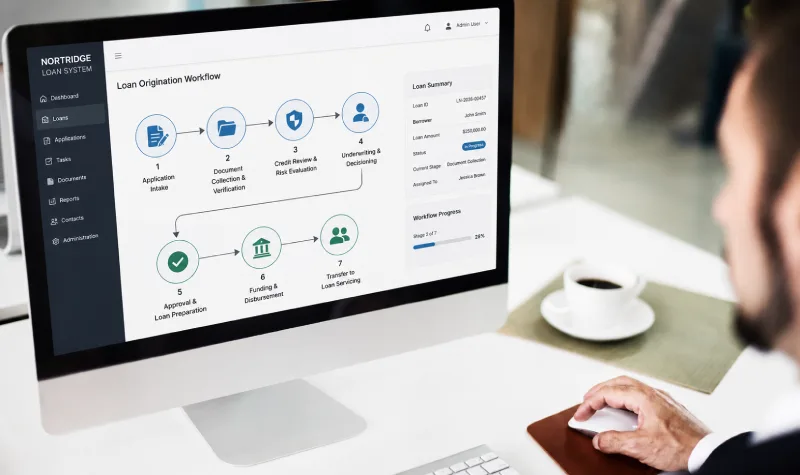
The 7 Stages of a Loan Origination System Workflow
Most loan origination workflows follow a similar loan processing workflow, though the specifics vary by lender and loan type.
1. Application Intake
The workflow begins when a borrower submits an application and the lender collects initial loan and borrower information. This stage includes data collection and an initial qualification review to confirm the application meets basic criteria before moving forward.
2. Document Collection and Verification
This stage involves gathering and confirming the documents needed to support the application, including income verification, identity verification, and other supporting paperwork. Missing document tracking helps staff identify gaps before they cause delays later in the process.
3. Credit Review and Risk Evaluation
Lenders review credit reports, risk scores, and debt levels against their internal lending criteria during this stage. This evaluation gives lenders a clearer picture of the borrower’s overall financial position before the loan moves to underwriting.
4. Underwriting and Decisioning
Underwriting involves a detailed review of the application, credit findings, and any additional conditions that need to be met. Based on this review, the loan moves toward an approval or denial decision, with more complex cases escalated for further review.
5. Approval and Loan Preparation
Once a loan is approved, internal teams finalize loan terms and prepare the documentation needed to move forward. This stage typically includes a documentation review and the creation of an audit trail to support compliance tracking later in the loan’s life.
6. Funding and Disbursement
After final checks are complete, the loan funds and disbursement begins. Lenders track disbursement details and maintain recordkeeping throughout this stage to support accurate reporting once the loan becomes active.
7. Transfer to Loan Servicing
Once a loan is funded, it becomes active and moves into servicing. Payment schedules are established, and ongoing borrower management begins, along with reporting and portfolio monitoring. This handoff marks the difference between loan origination and servicing: origination ends once funding is complete, while servicing covers everything that happens for the life of the loan.
Common Loan Origination Workflow Challenges
Lenders managing growing loan volume often run into similar operational challenges.
| Challenge | Impact |
| Manual data entry | Slower processing |
| Disconnected systems | Duplicate work |
| Missing documents | Delayed approvals |
| Limited reporting | Reduced visibility |
| Inconsistent workflows | Operational inefficiencies |
| Growing loan volume | Scalability concerns |
These challenges tend to compound. A lender dealing with disconnected systems is also more likely to struggle with reporting and visibility, since data is scattered across multiple tools instead of centralized in one place.
Best Practices for Building an Efficient Loan Origination Workflow
Lenders looking to improve their workflow can start with a few foundational changes.
Standardize Processes Across Teams
Consistent review steps and clearly defined responsibilities reduce confusion and keep loans moving through the same stages regardless of who is handling them. This also makes training new staff easier, since the process itself does not change from person to person.
Centralize Documents and Data
Keeping documentation in a single source of truth makes audits easier and reduces the time spent searching for missing files. When everything lives in one place, staff spend less time tracking down information and more time advancing loans.
Use Configurable Workflow Rules
Task routing, approval paths, and workflow triggers let lenders adapt the process to their needs rather than forcing every loan through a rigid sequence. This kind of flexible process management is especially useful for lenders handling multiple loan types with different requirements.
Improve Reporting and Visibility
Dashboards and performance monitoring give lenders pipeline visibility, helping them spot bottlenecks before they become bigger problems. Strong reporting also supports better conversations with investors and stakeholders who want insight into loan performance.
Connect Origination and Servicing Operations
A smooth handoff from origination into servicing keeps borrower data intact and avoids the disruption that comes from re-entering information into a separate system once a loan funds.
How Nortridge Supports Loan Origination Workflows
The Nortridge Loan Origination System (LOS) supports the application-to-funding process and connects directly with Nortridge Loan System for servicing. Its loan origination software helps teams coordinate intake, underwriting, documents, and onboarding through configurable workflows.
Nortridge LOS supports:
- Application intake: Receive applications from multiple sources, prefill existing borrower information, and avoid duplicate records.
- Team assignment: Route applications through automated workflows and rules-based assignment.
- Underwriting: Manage counteroffers, reworked applications, and deal structure changes in a dedicated workspace.
- Verification: Connect with credit bureau and employment verification sources to support application review.
- Document preparation: Generate loan agreements, disclosures, and notices, with DocuSign integration for signing.
- Servicing onboarding: Automatically populate borrower, loan, and collateral information in Nortridge Loan System.
Lenders who prefer their current origination software can keep it and integrate with Nortridge for servicing. This gives teams a choice between Nortridge’s connected platform and an existing LOS linked to Nortridge Loan System.
Improve Loan Workflow Visibility Across the Lending Lifecycle
An effective loan origination system workflow helps lenders reduce manual work, improve visibility, and create a more consistent borrower experience. As loan volume grows, configurable workflows, reporting tools, and centralized loan management become increasingly important for maintaining operational efficiency.
Nortridge LOS and Nortridge Loan System connect origination with servicing, payments, collections, and reporting. Borrower and loan information moves into servicing automatically, reducing duplicate entry and helping teams maintain consistent records.

See Nortridge in Action
See how Nortridge LOS connects application intake, underwriting workflows, and document generation with ongoing loan servicing.