
Loan management software needs to support your current portfolio and give your operation room to grow. As loan volumes increase, servicing teams need systems that can manage complex repayment structures, configurable workflows, collections, and integrations without disrupting existing processes.
The right platform depends on the loans you service, the complexity of your workflows, and how your operational requirements may change as your portfolio grows.
This guide compares 10 loan management software platforms in 2027, highlighting their servicing capabilities, flexibility, scalability, and operational focus.
Editor’s Note: This comparison is based on publicly available product information, documentation, and third-party reviews. Features, pricing, and capabilities may vary depending on each platform’s configuration and business requirements.
Best Loan Management Software at a Glance
Compare the top loan management software platforms based on their primary capabilities and the types of lending organizations they serve.
| Platform | Primary Focus |
| Nortridge | Scalable, Configurable Loan Servicing |
| TurnKey Lender | End-to-End Lending |
| Finastra | Enterprise Commercial Lending |
| LoanPro | API-First, Scalable Loan Management |
| defi SOLUTIONS | Auto Finance and Loan Servicing |
| The Mortgage Office | Mortgage Loan Servicing |
| HES LoanBox | Modular Lending Operations |
| Bryt Software | Modular Loan Servicing |
| Mambu | Cloud Banking and Lending |
| Margill Loan Manager | Complex Loan Calculations and Servicing |
How We Evaluated the Best Loan Management Software
We compared loan management software platforms based on the capabilities that matter most to lenders and loan servicers. Our evaluation focuses on five key factors:
- Loan servicing capabilities: Support for payment processing, collections, and ongoing loan portfolio management.
- Flexibility and configurability: Ability to support different loan types, servicing workflows, and business requirements.
- Reporting and visibility: Tools for tracking loan performance, generating reports, and accessing portfolio data.
- Scalability and integrations: Ability to support growing loan volumes, increasingly complex portfolios, and connections with existing business systems.
- Implementation and support: Available onboarding resources, implementation options, and ongoing customer support.
10 Best Loan Management Software Platforms
The best loan management software depends on your loan types, servicing requirements, portfolio complexity, and plans for growth. The following profiles describe each platform’s published capabilities and operational focus.
1. Nortridge
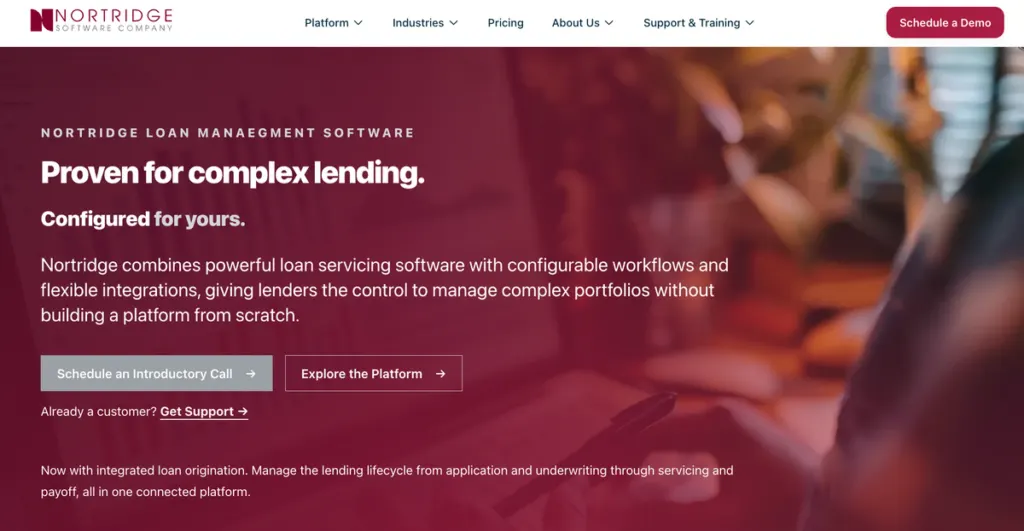
Platform Focus: Scalable, configurable servicing for lenders and loan servicers managing diverse or complex portfolios.
Nortridge Loan System is a scalable, configurable loan management platform for lenders and loan servicers managing diverse or complex portfolios. Its flexible architecture supports growing loan volumes, multiple loan types, and servicing operations with different workflow requirements. Nortridge provides configurable servicing and collections workflows, API integration capabilities, portfolio reporting, and flexible hosting options. The integrated Nortridge Loan Origination System (Nortridge LOS) also connects origination with ongoing servicing. With more than 40 years of industry experience and $750B+ in active loans managed, Nortridge brings established experience to complex servicing operations.
Key Features:
- Configurable loan servicing and collections workflows
- Portfolio reporting, dashboards, and access to loan-level data
- Support for diverse loan types and complex portfolios
- Extensive API integrations and flexible hosting options
Strengths: Scalable loan servicing for growing and complex portfolios, configurable workflows that adapt to existing operations, extensive integration capabilities, and U.S.-based support.
2. TurnKey Lender
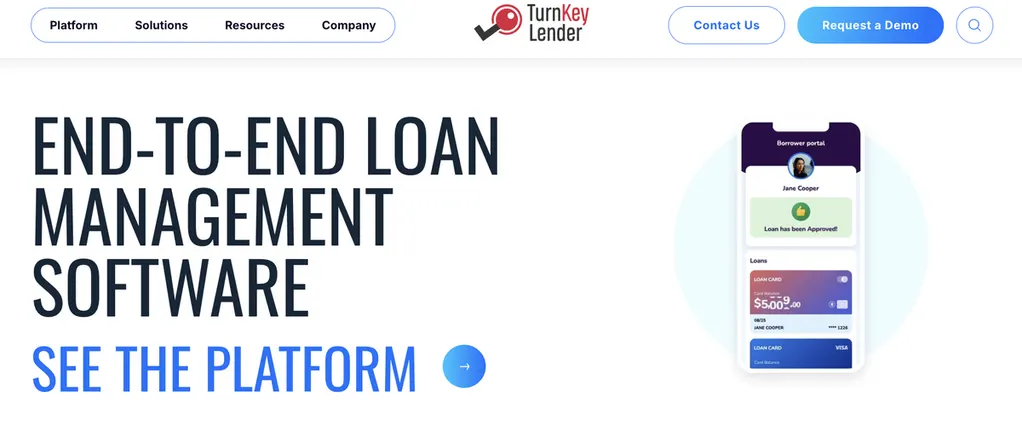
Platform Focus: End-to-end lending operations with automated credit decisioning.
TurnKey Lender is a cloud-based loan management platform that supports the entire lending lifecycle, from loan origination and underwriting to servicing and collections. Designed for consumer and commercial lenders, the platform uses AI-powered decisioning to automate credit evaluations and streamline lending operations. It also offers configurable loan products, borrower portals, and reporting tools to help organizations manage lending processes within a single system.
Key Features:
- AI-powered credit scoring and underwriting
- Automated loan origination and servicing workflows
- Configurable loan products and repayment schedules
- Borrower portals, collections management, and reporting
Strengths: Comprehensive lending lifecycle coverage, AI-driven decisioning, and configurable workflows.
3. Finastra

Platform Focus: Commercial and syndicated loan servicing for financial institutions.
Finastra offers a suite of lending solutions, including Loan IQ, a loan management and servicing platform designed for commercial and corporate lenders. Loan IQ supports a wide range of loan structures, from bilateral and small business loans to complex syndicated lending arrangements. The platform helps financial institutions manage loan servicing, automate workflows, track financial transactions, and connect with existing banking systems through its integration capabilities.
Key Features:
- Commercial and syndicated loan servicing
- Automated loan processing and transaction management
- Loan accounting, reporting, and audit trails
- API integrations through Loan IQ Nexus
Strengths: Extensive commercial lending capabilities, support for complex loan structures, and enterprise-scale servicing.
4. LoanPro
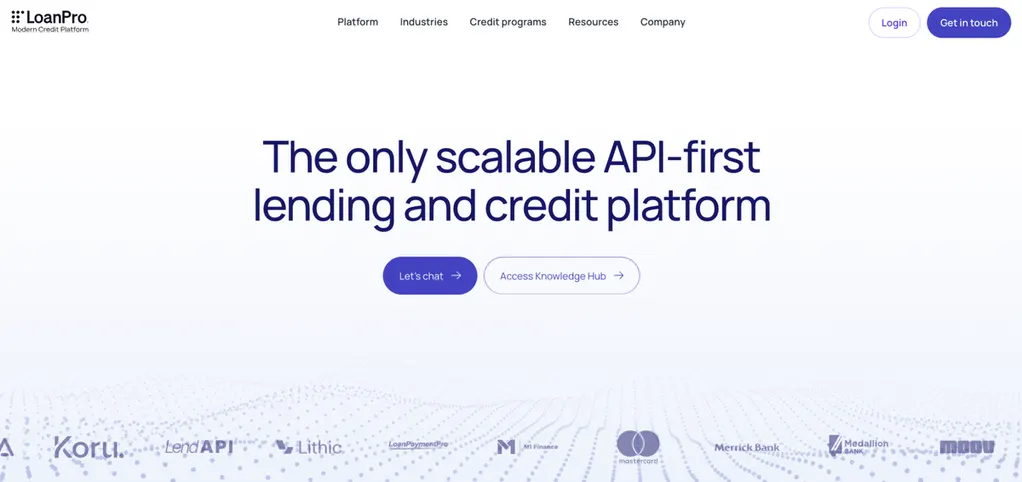
Platform Focus: API-first loan management and servicing for lenders, fintechs, and financial institutions.
LoanPro is an API-first loan management platform designed for lenders, fintechs, and financial institutions managing diverse lending programs. The platform supports the full loan lifecycle, including origination, servicing, payment processing, and collections. Its configurable workflows, automation engine, and integration capabilities help organizations manage complex loan products and connect lending operations with existing systems. LoanPro also offers reporting tools, borrower self-service options, and support for installment loans, lines of credit, and credit cards.
Key Features:
- API-first architecture and third-party integrations
- Configurable loan servicing and collections workflows
- Automated payment processing and loan recasting
- Portfolio reporting and borrower self-service portal
Strengths: API-first architecture, scalability, flexible loan configurations, and extensive integration capabilities.
5. defi SOLUTIONS
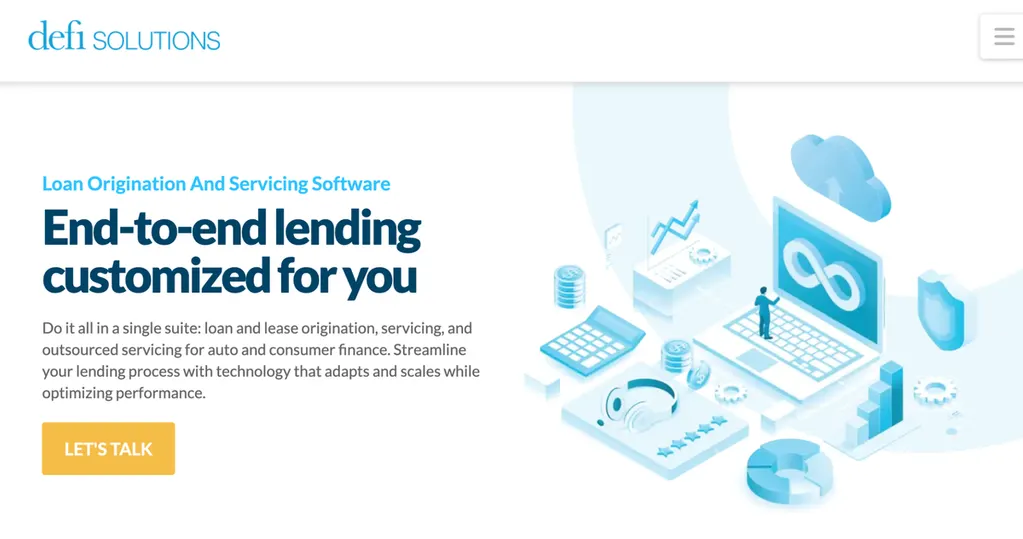
Platform Focus: Auto finance loan and lease servicing.
defi SOLUTIONS provides loan origination and servicing software designed primarily for auto finance and consumer lending organizations. Its defi SERVICING platform supports loan and lease account management, payment processing, collections, and collateral tracking. The company also offers borrower self-service tools, configurable workflows, and integrations with third-party systems. Additional solutions support loan origination, repossession management, and outsourced servicing, allowing lenders to manage different stages of the lending lifecycle.
Key Features:
- Loan and lease account management and payment processing
- Automated collections, repossession, and default management workflows
- Vehicle collateral and title management
- Borrower self-service portal and third-party integrations
Strengths: Specialized auto finance capabilities, comprehensive loan and lease servicing, and scalable workflows.
6. The Mortgage Office
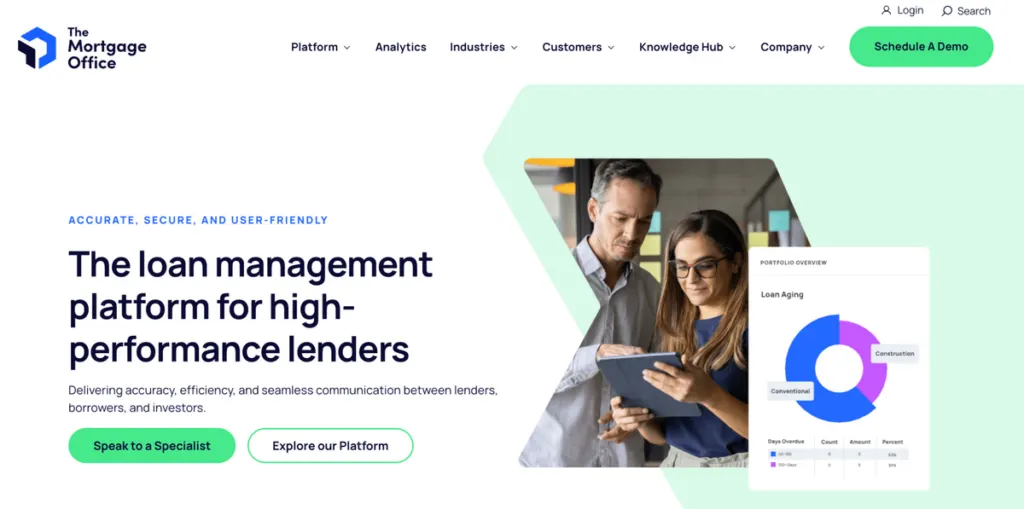
Platform Focus: Private mortgage servicing and investor-funded loan administration.
The Mortgage Office is a web-based loan management platform that supports loan origination, servicing, and investor management. Designed for private lenders, community development financial institutions (CDFIs), and housing organizations, the software helps manage loan payments, escrow accounts, investor distributions, and portfolio reporting. Its servicing tools support various mortgage structures, including adjustable-rate and construction loans, while borrower and investor portals provide access to account information and financial documents.
Key Features:
- Automated mortgage payment processing and escrow management
- Investor accounting, distributions, and fund management
- Borrower and investor self-service portals
- Loan portfolio reporting and configurable servicing workflows
Strengths: Specialized mortgage servicing capabilities, integrated investor accounting, and support for complex loan structures.
7. HES LoanBox
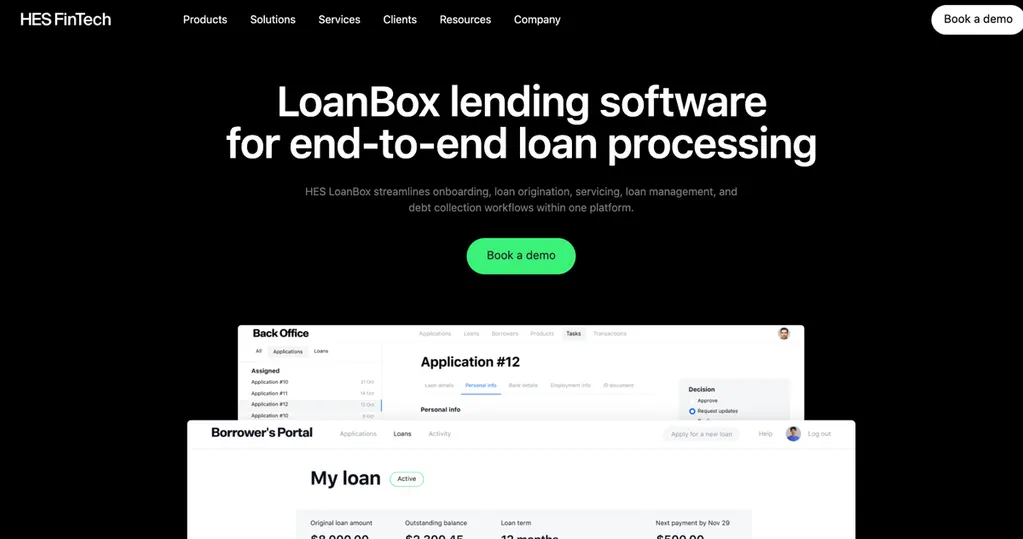
Platform Focus: Modular origination, servicing, and collections for lending operations.
HES LoanBox is a modular loan management platform developed by HES FinTech that supports digital onboarding, loan origination, servicing, and debt collection. Designed for consumer and commercial lenders, the software offers configurable workflows, loan product management, and AI-powered credit decisioning. Its modular architecture allows organizations to select capabilities based on their lending requirements, while API integrations, reporting tools, and flexible deployment options support a range of operational needs.
Key Features:
- Modular loan origination, servicing, and collections
- AI-powered credit scoring and underwriting
- Configurable loan products and repayment schedules
- API integrations and cloud or on-premises deployment
Strengths: Modular architecture, comprehensive lending lifecycle coverage, and flexible deployment options.
8. Bryt Software
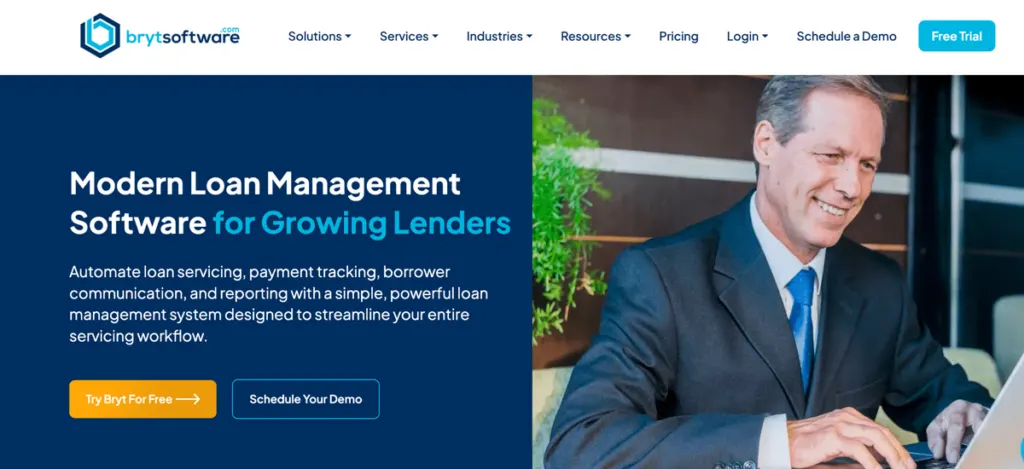
Platform Focus: Modular loan account servicing and payment tracking.
Bryt Software is a cloud-based loan management platform designed to simplify day-to-day servicing for private, consumer, and commercial lenders. The software helps organizations manage loan accounts, track payments, calculate interest, and generate portfolio reports from a centralized system. Its modular structure allows lenders to add capabilities such as ACH processing, borrower portals, investor management, and API integrations based on their operational needs.
Key Features:
- Loan payment tracking and interest calculations
- Automated servicing workflows and borrower notices
- Portfolio dashboards and financial reporting
- Optional borrower portals, ACH processing, and API integrations
Strengths: Loan payment tracking, interest calculations, modular servicing capabilities, and portfolio reporting.
9. Mambu

Platform Focus: Cloud-native banking infrastructure with lending and servicing capabilities.
Mambu is a broader cloud-native banking platform that includes lending and loan servicing capabilities. Its lending engine supports configuration of loan products and management of repayments, collections, and account servicing. Mambu’s composable architecture connects lending capabilities with other banking systems and services through APIs. This gives the platform a different product focus from software centered primarily on loan servicing.
Key Features:
- Configurable loan products, interest rates, and repayment schedules
- Loan account servicing, payment processing, and collections
- API-first architecture and third-party integrations
- Cloud-native infrastructure supporting multiple lending models
Strengths: Flexible lending product configuration, extensive integration capabilities, and scalable cloud infrastructure.
10. Margill Loan Manager
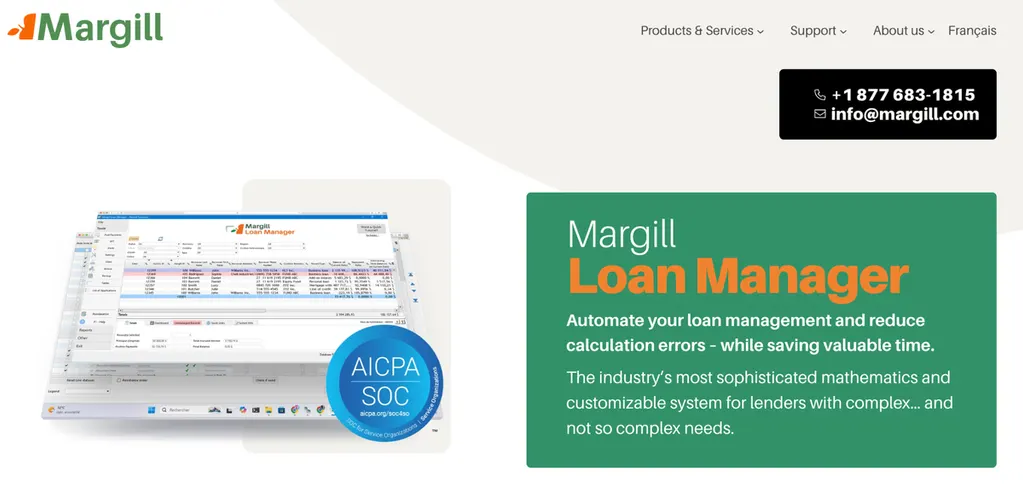
Platform Focus: Loan administration with complex interest calculations and repayment schedules.
Margill Loan Manager is a loan servicing platform designed for lenders managing diverse loan portfolios and complex repayment structures. The software supports fixed and variable interest rates, irregular payments, amortization schedules, and loan accounting. It also provides tools for tracking payments, managing borrower accounts, generating reports, and automating routine servicing tasks. Margill supports multiple loan types, including mortgages, commercial loans, lines of credit, and participation loans.
Key Features:
- Advanced interest calculations and amortization schedules
- Fixed and variable interest rates with flexible repayment options
- Automated payment tracking, fees, and borrower reminders
- Portfolio reporting, loan accounting, and API integrations
Strengths: Advanced loan calculation capabilities, flexible repayment structures, and comprehensive payment tracking.
How to Choose the Best Loan Management Software
Loan management software should support your current servicing operation while accommodating changes in loan volume, portfolio complexity, and business processes. These five factors help distinguish the platforms:
- Loan Types, Portfolio Complexity, and Scalability: Assess support for your loan products, repayment structures, current servicing volume, and the operational demands of a growing portfolio.
- Servicing and Collections Capabilities: Evaluate payment processing, collections workflows, borrower management, and tools for handling delinquent accounts.
- Configuration and Integrations: Choose a platform that adapts to your existing processes and connects with your payment providers, accounting systems, and other applications.
- Reporting and Data Visibility: Prioritize reporting tools, dashboards, and access to loan-level data to monitor portfolio performance and support decision-making.
- Pricing, Implementation, and Support: Consider total costs, implementation requirements, training resources, and ongoing customer support.
Find the Right Loan Management Software for Your Business
Loan management platforms differ in how they support servicing workflows, integrations, and portfolio growth. For organizations managing multiple loan types or complex servicing requirements, scalability and configurability are important considerations.
Nortridge Loan System combines scalable loan servicing with configurable workflows, integration capabilities, and support for diverse portfolios. Backed by more than 40 years of industry experience and U.S.-based support, Nortridge helps servicing teams manage complex operations with flexibility and control.
Still comparing your options? Explore our loan management software comparison guides for a closer look at how Nortridge compares to other platforms.
See How Nortridge Supports Your Growing Loan Portfolio
Explore how Nortridge’s scalable architecture, configurable workflows, and integration capabilities support your servicing requirements. See Nortridge in action for your portfolio.
Frequently Asked Questions