

Lenders often manage loan origination, servicing, payments, and reporting through separate systems that don’t naturally share information. Staff end up re-entering the same borrower data multiple times, which slows work down and increases the chance of errors.
API integration is the connection that lets these systems share data on their own. In this guide, we’ll explain what API integration means, how it works step by step, why it matters for lending operations, and what to look for in a strong API framework.
Key Takeaways
- APIs remove manual data entry: Connected systems share loan data automatically, so staff stop retyping information across platforms.
- Integration keeps data accurate: Automated data exchange cuts down on errors from duplicate entries and delayed updates.
- A strong API framework scales with growth: Lenders add new tools or expand loan volume without rebuilding connections.
- Nortridge supports open, secure API connections: The platform uses OAuth 2.0 authentication and supports XML and JSON formats.
What Is API Integration?
API integration is the process of connecting two or more software applications so they can securely exchange data and complete tasks automatically. For lenders, this typically means linking a loan servicing platform to an API integration framework that connects payment processors, credit bureaus, and document management systems.
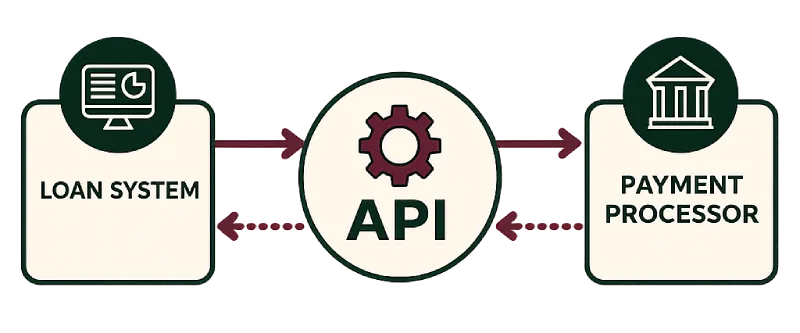
Picture a loan servicing platform and a payment processor as two separate systems that need to stay in sync. One system sends a request, the other responds, and the API manages that exchange in the background so data stays current on both sides without anyone re-entering it.
How Does API Integration Work?
API integration works by letting one application request information from another and receive a response automatically. Most integrations follow the same four-step process:
- One application sends a request. A loan servicing platform requests a borrower’s payment status from a payment processor.
- The API delivers the request. It securely passes the request to the connected system.
- The receiving system processes it. The connected application locates the requested information or completes the requested action.
- The response returns automatically. Data flows back to the original application, updating records without manual entry.
Why API Integration Matters for Lenders
API integration helps lenders reduce manual work, improve data accuracy, and connect the systems they rely on every day. Rather than moving information between platforms by hand, APIs handle data exchange automatically across the loan lifecycle.
Reduces Manual Data Entry
Manual data entry ties up staff time and introduces errors every time someone retypes borrower or loan information between systems. API integration removes that step by moving data automatically between platforms, so teams spend less time on repetitive tasks and more time on work that requires judgment.
Connects Disconnected Lending Systems
API integration connects the separate tools that make up a lender’s operations, rather than leaving them to run in isolation. Without it, staff often bridge the gaps in their lending tech stack manually, moving data between origination, servicing, and reporting systems by hand.
Improves Data Accuracy
API integration improves data accuracy by keeping information synchronized as updates move between connected systems, cutting down on duplicate entries and delayed updates. Clean, synced data also strengthens loan reporting, since dashboards pull from one accurate source instead of manually reconciled exports.
Speeds Up Lending Workflows
API integration speeds up lending workflows by removing the handoff delays that happen when staff move data between systems by hand. Faster data exchange keeps each stage of the loan processing workflow moving, from intake through funding, without waiting on manual updates.
Makes It Easier to Scale Operations
API integration makes it easier to scale operations by giving lenders a consistent way to connect new tools as their technology stack and loan volume grow.
Common API Integrations in Lending
Rather than focus on technical endpoints, here’s where lenders typically put API integration to work day to day.
| Lending Function | API Integration Example |
| Credit bureaus | Retrieve borrower credit data |
| Payment processors | Accept online payments |
| Accounting software | Sync financial information |
| CRM systems | Share borrower updates |
| Document management | Transfer signed loan documents |
| Identity verification | Verify borrower identity |
For example, document management integrations such as DocuSign let lenders generate and send loan agreements for electronic signature without leaving their servicing platform.
What Should Lenders Look for in an API Framework?
A strong API framework should support secure connections, flexible data handling, and room to grow. Here’s what to check for before choosing a platform.
Secure Authentication
Secure authentication protects borrower and loan data as it moves between systems. Look for a framework that uses token-based authentication, such as OAuth 2.0, so every connection requires verified access rather than open, unprotected requests.
Flexible Data Formats (XML & JSON)
Flexible data formats help a platform exchange information with both older and newer systems. A framework that supports XML and JSON payloads can work with legacy infrastructure and modern applications alike.
Comprehensive Endpoints
Comprehensive endpoints determine how much of the loan lifecycle an API can actually support. Look for coverage across borrower records, loan data, transactions, and document handling, so integrations don’t stall out on the tasks that matter most.
Thorough Documentation
Thorough documentation shortens setup time and reduces the back-and-forth needed to get a connection working. Clear reference guides, sample code, and defined endpoints help internal teams or vendors build integrations without guessing at how the API behaves.
Scalability
Scalability means the API can handle growing transaction volumes and additional connections without slowing down. As loan volume increases or new tools get added, the framework should support that growth without requiring a rebuild.
Common API Integration Challenges
API integration comes with a few recurring challenges lenders should plan for:
- Connecting legacy systems that weren’t built to share data with modern platforms
- Maintaining consistent data across every connected system as records update
- Managing security across multiple connections and data exchanges
- Supporting new integrations as the lending tech stack grows
Choosing an established lending platform with a documented, secure API framework can reduce integration friction. Clear connection options, documentation, and implementation support give teams a stronger foundation for managing compatibility, security, and future integrations.

How Nortridge Supports API Integration
Nortridge supports API integration through an extensive API framework, configurable workflows, secure data exchange, and flexible connections with other lending systems.
Extensive API Framework
Nortridge offers REST, SOAP, and COM API options, along with XML import and web services for connecting loan servicing data with other systems. These options give lenders flexibility in how they exchange data with internal applications and third-party technology.
Configurable Workflows
Nortridge pairs its API framework with configurable workflows, giving lenders control over how connected data moves through their servicing processes.
Secure Data Exchange
Secure data exchange keeps borrower information protected as it moves between systems. Nortridge APIs use OAuth 2.0 authentication and support both XML and JSON payloads, so connections stay secure whether lenders are working with legacy tools or modern platforms.
Built to Integrate With Your Tech Stack
Nortridge is built to connect with the rest of a lender’s tech stack. The platform supports connections with payment processors, credit bureaus, document management tools, and other systems lenders rely on, helping data move between platforms instead of remaining siloed.
Frequently Asked Questions
What is API integration?
API integration connects two or more software systems so they can exchange data and automate tasks without manual entry, keeping information synced across every connected platform.
What is a loan API?
A loan API is a connection point that lets loan servicing platforms share borrower, payment, and loan data with other systems like credit bureaus or payment processors.
How do lending APIs work?
Lending APIs work by letting one system request information from another and receive a response automatically, using secure, token-based authentication to protect data in transit.
Are APIs secure for financial data?
APIs are secure for financial data when they use token-based authentication like OAuth 2.0 and encrypted connections, protecting borrower information as it moves between systems.
Why is API integration important for lenders?
API integration is important for lenders because it removes manual data entry, reduces errors, and keeps every connected system working from the same accurate information.
The Future of Lending with API Connectivity
APIs connect the systems lenders rely on every day, from origination to servicing to reporting. As lending operations grow more complex, a documented, secure API framework gives lenders the flexibility to add tools and scale without rebuilding their technology from scratch.
See How Nortridge’s API Framework Connects Your Lending Technology
Explore Nortridge’s API integration options and start connecting your systems.